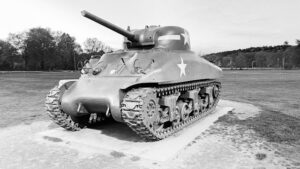
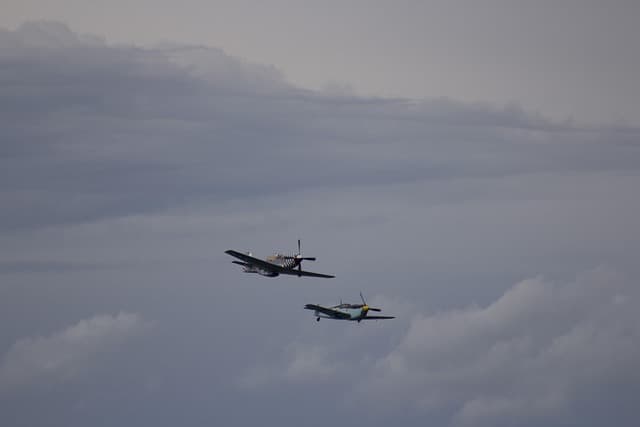
During World War II, Germany took over most of Europe using a new tactic called “blitzkrieg” (lightning war). Blitzkrieg involved a massive attack using planes, tanks, and artillery. These units were supposed to break through enemy defenses in a narrow section of the front. Air support prevented the enemy from closing the breach in the defenses. The Wehrmacht surrounded the resisting forces, forcing them to surrender.
Using blitzkrieg tactics, Germany defeated Poland (invasion in September 1939), Denmark (April 1940), Norway (April 1940), Belgium (May 1940), the Netherlands (May 1940), Luxembourg (May 1940), France (May 1940), Yugoslavia (April 1941), and Greece (April 1941). However, the Nazis failed to conquer Great Britain, which was protected from ground attacks by the English Channel.
In June 1941, the Wehrmacht attacked the USSR and advanced 960 kilometers into the country. The second offensive began in 1942, and this time the Nazis reached the banks of the Volga and Stalingrad. However, the Soviet Union, together with Great Britain and the United States, which entered the war against Germany in December 1941, managed to turn the tide of the war in their favor.
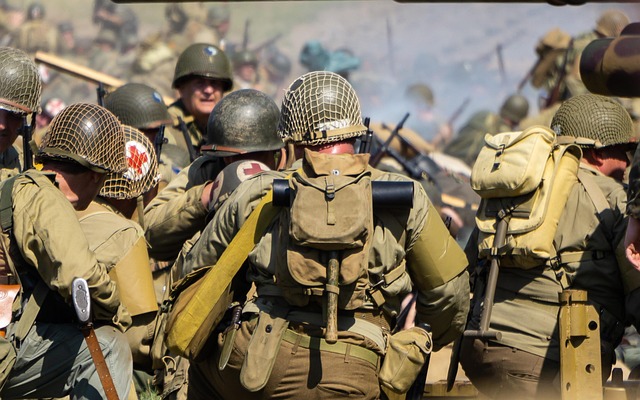
The Battle of Stalingrad was a turning point in the war on the Eastern Front. After losing at Stalingrad in the winter of 1942–1943, German troops started a long retreat. In April 1945, Soviet troops entered Berlin. On the Western Front, the defeat of the Wehrmacht was supported by Allied troops who landed in Normandy, France, on June 6, 1944 (a date that went down in history as “D-Day”). More than two million soldiers of the anti-fascist coalition landed on the French coast. In July, their units broke through the Normandy beachhead. The Allies continued their advance deep into Germany. In March 1945, their troops crossed the Rhine and approached the central regions of Germany.
In May 1945, Nazi Germany surrendered.