Yakov Wasserman (Krakow – Proszowice – Israel)
Yakov was the eldest of three sons in a religious Jewish family living in Krakow. His father traded in flour, and every summer the family spent time at his grandfather’s farm near Proszowice. His grandfather owned a small flour mill, and Yakov’s childhood was spent among fields and the smell of freshly ground grain.
1933–1939
In the spring of 1939, at the age of thirteen, Yakov celebrated his bar mitzvah, an important event in the life of every Jewish boy. However, the joy did not last long. In September, Krakow was captured by German troops. Severe restrictions were imposed: Jews were forbidden to walk on sidewalks, use public transport, or own radios. It became dangerous to go out on the streets—people were grabbed for no reason, beaten, and taken away to unknown destinations.
1940–1945
In 1940, the family fled to a farm near Proszowice, hoping to hide from the occupying forces. But there was no salvation there either. One Saturday morning, a raid on Jews began.
As the column of prisoners was being led through the village, a Polish policeman standing next to the bodies of two dead men attacked Yakov, accusing him of not greeting him. He pointed a pistol at the teenager, cocked the hammer, and struck him with the barrel, breaking his nose and jaw. Yakov miraculously survived: he managed to hide among the other prisoners, and another man was shot in his place.
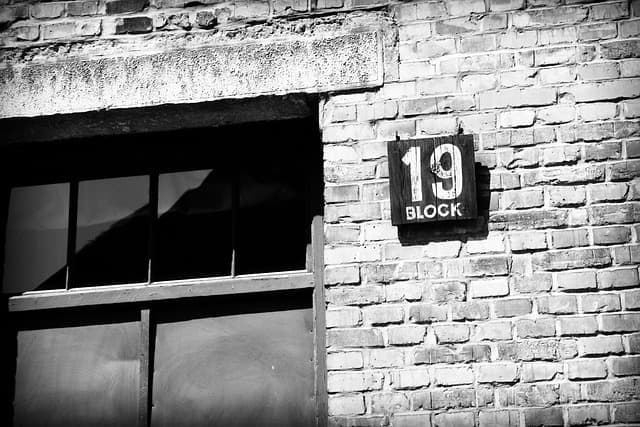
A few days later, Yakov and his father were deported to the Prokocim labor camp. He spent the rest of the war in camps, where he faced death and starvation on a daily basis.
After his liberation in 1947, Yakov attempted to enter Palestine illegally, but the British authorities detained him in Cyprus. Only a year later, in 1948, was he able to settle in Israel, a country that became a symbol of new life for him.
Benjamin Bornstein (Łódź – Auschwitz – Hanover – Palestine)
Benjamin Bornstein was born into a Jewish family in the industrial city of Łódź, Poland’s second largest city, where Jews made up a third of the population. His father, Moshe, owned a small candle factory, and his mother, Brona, worked as a nurse. He also had a younger brother, Zygmunt.
1933–1939
By 1939, Benjamin was in third grade. With the arrival of the Germans in Łódź, the life of the Jewish community changed instantly: Jews were forbidden to use public transport and were forced to wear yellow stars. Raids began to take place in the streets—soldiers grabbed passersby and sent them to forced labor.
To protect his father, the family decided that Benjamin would carry out all errands. Together with the housekeeper’s son, with whom they had had little contact before the war, he now went out every day to buy food and run small errands, risking being caught.
1940–1944
In the spring of 1940, the Łódź Ghetto was finally sealed off. The Bornstein family found themselves there and settled in a cramped room. Benjamin managed to secretly bring things and food from their former home to help his family survive.
But in 1944, when the boy turned fourteen, the Nazis began liquidating the ghetto. The Bornsteins, along with others, were arrested and loaded into freight cars. In one of them, Benjamin noticed an inscription written in blood:
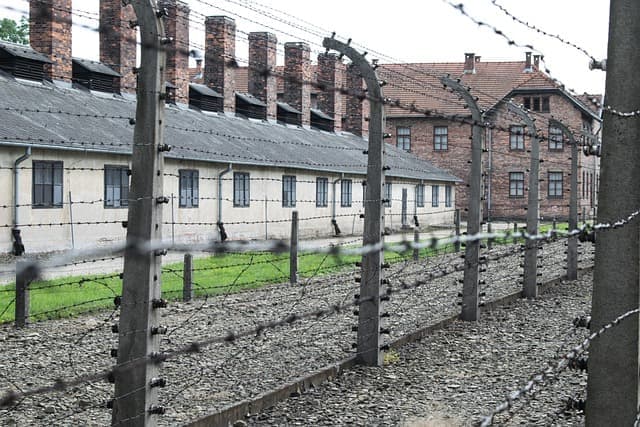
“We have arrived in Auschwitz, and here we will be killed.”
These words became an ominous confirmation of where they were being taken.
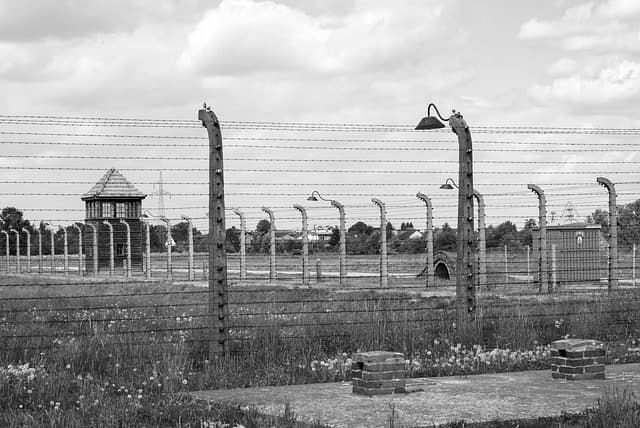
Benjamin was deported to Auschwitz, then transferred to a forced labor camp in Hanover, Germany. He survived the war, but lost almost his entire family. At the age of sixteen, as part of a group of orphans, Benjamin emigrated to Palestine, where he began a new life.
Memories that survived the war
The stories of Jacob Wasserman and Benjamin Bornstein are testimonies to the strength of the human spirit. Their fates are just two of the millions of voices that survived the horrors of the Holocaust. Each of them lost their home, their family, and their childhood, but they kept the most important thing—their memory and their will to live. Thanks to their stories, the world can hear the truth about the past so that nothing like this ever happens again.