Mass Repression and Tragedy in Central and Eastern Europe
While the first part of Petr Khodakiewicz’s research examined the socio-political preconditions of the war and its initial stages, the second part focuses on mass repression, deportations, and the destruction of populations, as well as the mechanisms through which these events were recorded and experienced by society.
This part of his work is critically important for understanding how political decisions, ideological campaigns, and militarization led to tragedies that still leave a deep mark on the memory of Central and Eastern Europe.
Mass deportations and repression
Khodakiewicz analyzes two main types of repression in detail:
- Political repression
- Arrests and liquidation of political activists, national leaders, and intellectuals.
- Use of camps, interrogations, and forced labor to suppress resistance.
- Creation of a system of fear through public executions and demonstrative punishments.
Ethnic and religious repression
Persecution of the Jewish population, Gypsies, and other minorities.
Forced resettlement and isolation in ghettos.
Destruction of cultural and religious institutions, banning of schools and societies.
The author cites archival documents, letters, and eyewitness accounts that show how these measures destroyed the lives of entire communities, leaving indelible psychological and demographic consequences.
Mass extermination
One of the central aspects of the second part is the analysis of mass killings and genocide, which Khodakiewicz examines using the example of Poland and neighboring regions:
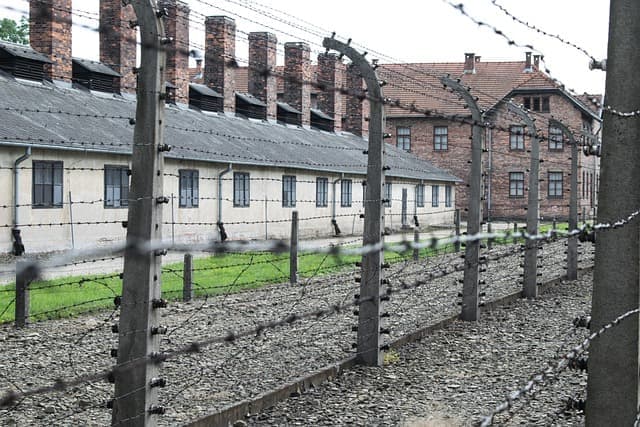
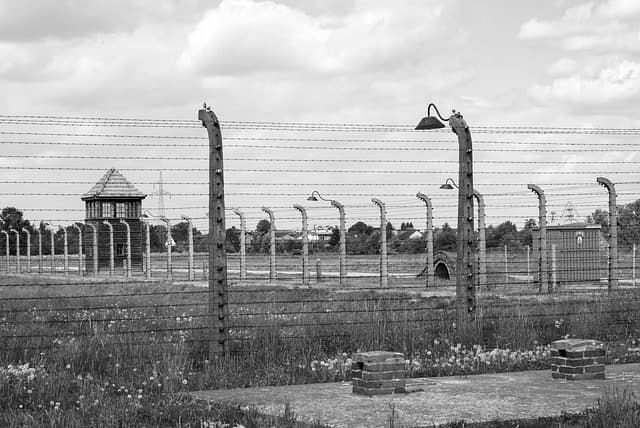
- The organization of systematic deportations to death camps and concentration camps.
- The use of mobilization to carry out mass executions and “cleansing” of territories.
- The impact of these actions on the demographic landscape of the region.
He emphasizes that the destruction of the population took place not only on the front lines, but also in peaceful towns and villages, often with the involvement of local collaborators, which added an additional layer of tragedy.
The reaction of society
Khodakiewicz describes how the population tried to adapt to the new conditions:
- The creation of underground schools, cultural and religious communities to preserve identity and morality.
- The development of secret aid systems for survivors and for the rescue of Jews (these actions later became known as the work of organizations such as Zegota).
- A propaganda war that divided people but also stimulated hidden forms of resistance.
- The author cites numerous examples from the archives, showing that even in the most dire circumstances, there were ways to preserve humanity and hope.
Psychological and demographic consequences
Khodakiewicz analyzes in detail the long-term consequences of repression:
- Demographic losses — a significant decrease in population, the destruction of family structures.
- Psychological trauma — a generation of children and adolescents who grew up in conditions of constant fear and loss.
- Social disorganization — the breakdown of traditional communities, the destruction of the institutions of education and culture.
- According to Khodakievich, these consequences were felt for decades and directly affected the post-war recovery of society.
The significance of the second part of the research
The second part of Khodakiewicz’s work is important because it:
- Creates a systematic understanding of repression and mass violence.
- Shows the interconnection between politics, ideology, and human destiny.
- It serves as a basis for understanding why the memory of World War II remains critically important for Central and Eastern Europe.
Conclusion
The second part of Peter Khodakiewicz’s research demonstrates the tragedy of mass repression and destruction, while emphasizing how societies tried to survive and preserve human dignity.
In the third part, Khodakievich’s attention will shift to post-war memory, restitution, and the preservation of historical evidence, which will complete the picture of the war and its long-term consequences for the region.