



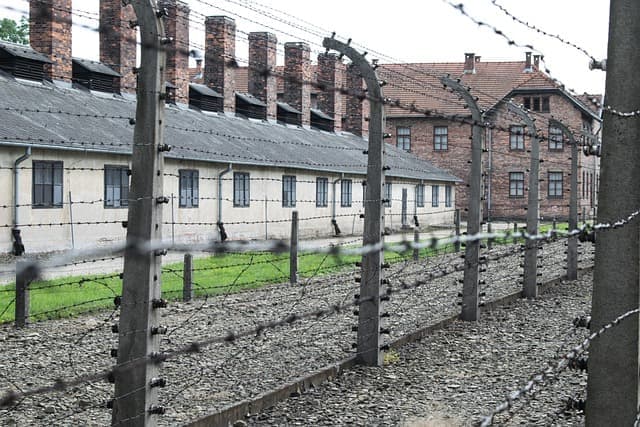

During World War II, the fate of psychiatric patients turned out to be one of the most tragic and little-known pages in history. People with mental disorders became the first victims of the Nazi regime’s policy of “racial hygiene” and forced euthanasia. Under the slogans of “purifying society” and “freeing the state from the burden,” hundreds of thousands of psychiatric hospital patients were exterminated in Germany and the occupied territories, many of whom were victims of cruel experiments and inhumane treatment.
The roots of this policy go back to the pre-war period. As early as 1933, shortly after Hitler came to power, Germany passed a law “On the Prevention of the Birth of Offspring with Hereditary Diseases.” According to this law, people with mental disorders, epilepsy, alcoholism, or mental retardation were subjected to forced sterilization. In 1939, Operation T-4 began, a secret program to destroy “subhuman life.” The Nazis believed that psychiatric patients were useless to society, economically burdensome, and did not deserve to exist. Doctors, obeying orders, compiled lists of patients who were then transported to special institutions where they were killed by injection, starvation, or gas.
Under the T-4 program, approximately 70,000 psychiatric patients were killed in Germany. However, the actual scale of the violence was much greater: after the program was officially shut down in 1941, the killings continued in secret, especially in Eastern Europe and the occupied countries. Medical personnel trained under T-4 continued to use the same methods in clinics, boarding schools, and hospitals. Patients suffered not only from direct killings, but also from systematic deprivation of food, medicine, and care. Many died of starvation or infections in overcrowded wards.
The situation was also catastrophic in other European countries, although the scale and forms of violence varied. In Poland, Czechoslovakia, the USSR, and France, psychiatric hospitals were bombed and suffered from a shortage of medicines, doctors, and food. Medical staff often faced a moral choice: to save patients at the risk of their own lives or to obey the occupying authorities. In some Polish and Soviet hospitals, doctors secretly hid patients, reporting them as dead or transferring them to regular hospitals.
Psychiatric clinics in the occupied territories were looted and destroyed, and staff and patients were often shot. In the rear regions, despite the absence of direct Nazi-style repression, conditions for patients deteriorated sharply. Due to a shortage of food and medicine, mortality in psychiatric institutions increased several times over. At the same time, psychiatrists continued to work with minimal resources and provided assistance not only to chronic patients, but also to soldiers who had suffered severe psychological trauma after the front.
We must not forget the fate of the doctors. Many psychiatrists were involved in crimes against humanity. Some of them acted under pressure from the regime, others out of a conviction that it was necessary to “purify the nation.” After the war, some of the participants in the T-4 program were brought to trial, but a significant number escaped punishment and even continued to practice medicine in postwar Germany. It was only at the end of the 20th century that German society began to speak openly about the scale of the extermination of the mentally ill and recognized this episode as part of the Holocaust.
At the same time, there were those who showed courage and humanity. There are known cases when doctors falsified diagnoses, hid patients, or organized their escape. In occupied France, the Netherlands, and Poland, psychiatrists and monks saved hundreds of people by hiding them in monasteries and private homes.
During World War II, psychiatric patients became some of the most vulnerable victims of totalitarian regimes and military brutality. Their suffering remained outside the public eye for a long time, as society avoided talking about them due to stigma and fear. Only decades later did their memory begin to be restored—in museums, scientific research, and memorial complexes.
The history of psychiatric patients during the war reminds us how dangerous the ideas of “racial purity” and “social utility” can be. It teaches us that human dignity does not depend on health, and that medical ethics must take precedence over political orders. Remembering the patients who died is not only a tribute to their suffering, but also a warning to humanity about what happens when science and medicine are turned into instruments of violence.